Families who settle well in Bali almost always do it in the same order: choose the school first, then find a home within a sane commute of it, then everything else. Bali rewards that sequence, because the island is bigger and slower than it looks on a map, and a beautiful villa an hour from school stops being beautiful by the second week. Get the school and the commute right and the rest of family life here is genuinely easier than at home.
Also in Nederlands · met kinderen naar Bali · Deutsch · auswandern nach Bali · Español · vivir en Bali
Choose the school first, then the neighbourhood
The school anchors everything: the daily run, the children's friendships, your calendar, even which side of the island your weekends happen on. So pick the school, then look for a home within about thirty minutes of it, not the other way around. Every family who does it in reverse ends up moving twice.
Broadly there are two family bases. The Ubud side, green and quiet, is home to Green School and the jungle villages. The west coast, from Canggu through Pererenan to Seseh and Munggu, has the beaches, the amenities and a growing cluster of international schools. Which one suits you is mostly a question of whether you want rice paddies or the ocean as the daily backdrop.
Ubud jungle or the coast: the real choice
The Ubud side gives you rice terraces, cooler air, Green School and a slower rhythm, but you are further from the beach and from Canggu's cafes, gyms and healthcare. The coast gives you surf, beaches, and everything in Canggu within reach, with more traffic in town as the trade.
What surprises most families: the coast is not cut off from Green School. From the Seseh and Munggu coast it is only around thirty minutes to Green School, about 14 km by road (Google Maps). That is the same 20 to 30 minute range Green School itself cites for its most popular villages. So a coastal home can keep even a Green School family within a normal school run, while putting the beach at the end of the street.
What a family actually needs, day to day
Space that works: a real kitchen, enough bedrooms, and a pool the children actually use. Other children within walking distance. A quiet, safe lane or an enclosed compound. Healthcare, a proper supermarket and the airport within reach. And a home that arrives furnished and managed, so you are settling a family rather than also running a building site.
Most of these are easy to check on a slow visit and impossible to fix later, so weigh them before the photographs win you over.
Why a neighbourhood beats a lone villa
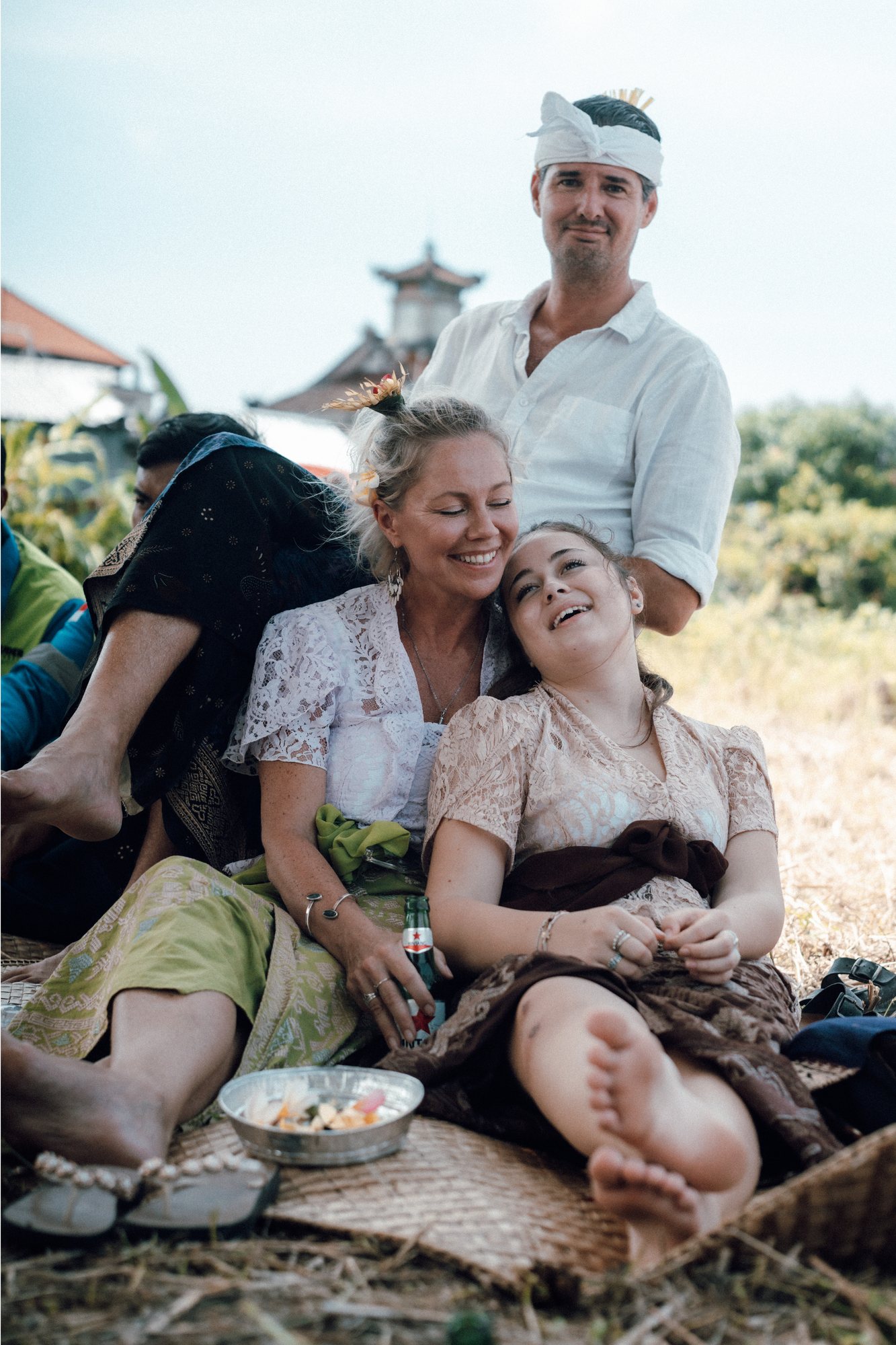
The single thing that makes or breaks a family's year is whether the children have friends on the doorstep. A beautiful villa down a quiet track is isolating for kids; a small neighbourhood where other families already live is where they grow up together, in and out of each other's houses, walking to school pickups as a pack.
That is exactly what Core Villas is built as: seventeen private pool villas in one compound at Seseh, Munggu, on the coast, around thirty minutes from Green School and close to the Canggu-area schools, opening as long-stay family residences from Q3 2027. Families who buy a villa at Core also have concierge relocation included, run with our partners at Our Year in Bali, so schools, visas and the move itself are handled. If you are planning a move around the school year, the residence waitlist is the place to start.
Rent first, then decide
The families who regret their move usually bought too fast. The informed sequence is to rent long term first: settle in, watch the children in their school, learn which side of the island fits your rhythm, then decide whether to buy at all. A one to two year lease costs a fraction of a wrong purchase and keeps your options open while the area and the paperwork prove themselves. Renting first is not the timid choice; it is the smart one.
This is where a managed long-stay residence beats a private landlord or a string of monthly Airbnbs: one lease, one professional team, furnished and maintained, so the family lands softly and the admin does not land on you. Core Villas is built for exactly this, long-stay family homes at Seseh, Munggu from Q3 2027, and the waitlist notes your dates and villa size now.
Timing the move to the school year
International schools here run roughly August to June, and the sought-after ones fill their intakes early, so the school calendar drives the whole move. Aim to arrive four to six weeks before term starts: enough time to unpack, settle the children into a routine, and sort SIM cards, transport and the daily run before the first bell.
Apply to schools well ahead, ideally the term before, and have your long-stay home lined up so you are not house-hunting from a hotel with jet-lagged kids. A soft landing is mostly a matter of doing things in the right order, and early.
Visas, healthcare and the admin, honestly
The regulated parts are best handled by professionals, not a forum. Families usually relocate on a stay permit, a KITAS, with dependent permits for the children, arranged through a licensed visa agent; the categories and rules change, so get current advice rather than trusting last year's post. Keep solid international health insurance and know your nearest clinics: the Canggu area has good private clinics and pharmacies within reach of the coast, with larger hospitals in Denpasar.
Banking, a local SIM and a scooter or car round out the first week. None of it is hard on its own; it is a list, and it goes smoothly when someone who does it every week walks you through it. For Core Villas families that is our relocation partners at Our Year in Bali, who set up the visas, the school run and the move before you land.